Office design has become one of the most important strategic decisions for modern companies. The layout you choose: whether open concept, zoned, or hybrid, directly affects productivity, collaboration, culture, privacy, and employee well-being. With hybrid work on the rise and workplace expectations shifting, businesses are rethinking how their office should function.
This guide breaks down the differences between open and zoned spaces, the strengths of each, and how to decide which layout best supports your team.
What Is an Open-Concept Office?
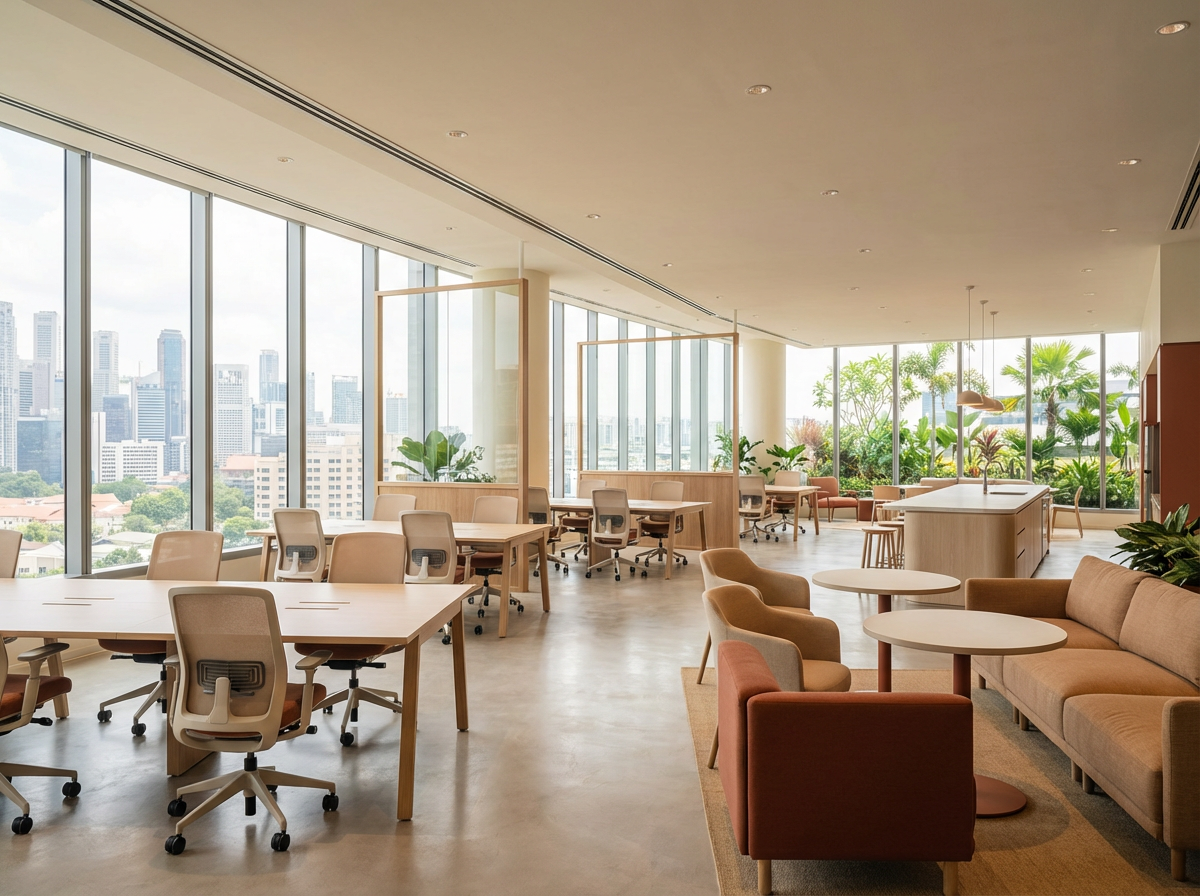
The open-concept office removes walls and barriers, creating one large shared workspace. Employees work together in an open environment with shared desks, communal tables, and minimal partitions. This layout became popular among tech companies for its collaborative energy and modern aesthetic.
Benefits of Open Concept
– Encourages Collaboration
With fewer physical barriers, employees interact more naturally. Quick discussions and spontaneous brainstorming become part of daily workflow.
– Cost-Efficient and Flexible
Because open offices require fewer walls and partitions, they are cheaper to build and easy to rearrange as teams grow and shift.
– Bright, Airy, and Modern
Open layouts allow natural light to reach more areas, improving mood and creating a more spacious feel.
– Enhances Team Bonding
Leaders stay more connected to the team, and employees feel part of a unified, transparent environment.
Challenges of Open Concept
– Noise & Distraction
Open spaces amplify conversations, tapping keyboards, and phone calls. Employees performing focus-heavy tasks may struggle.
– Limited Privacy
Sensitive conversations, HR matters, and quiet work are harder to manage.
– “Always On” Culture
Employees often feel watched, leading to social pressure and stress.
What Are Zoned Office Spaces?
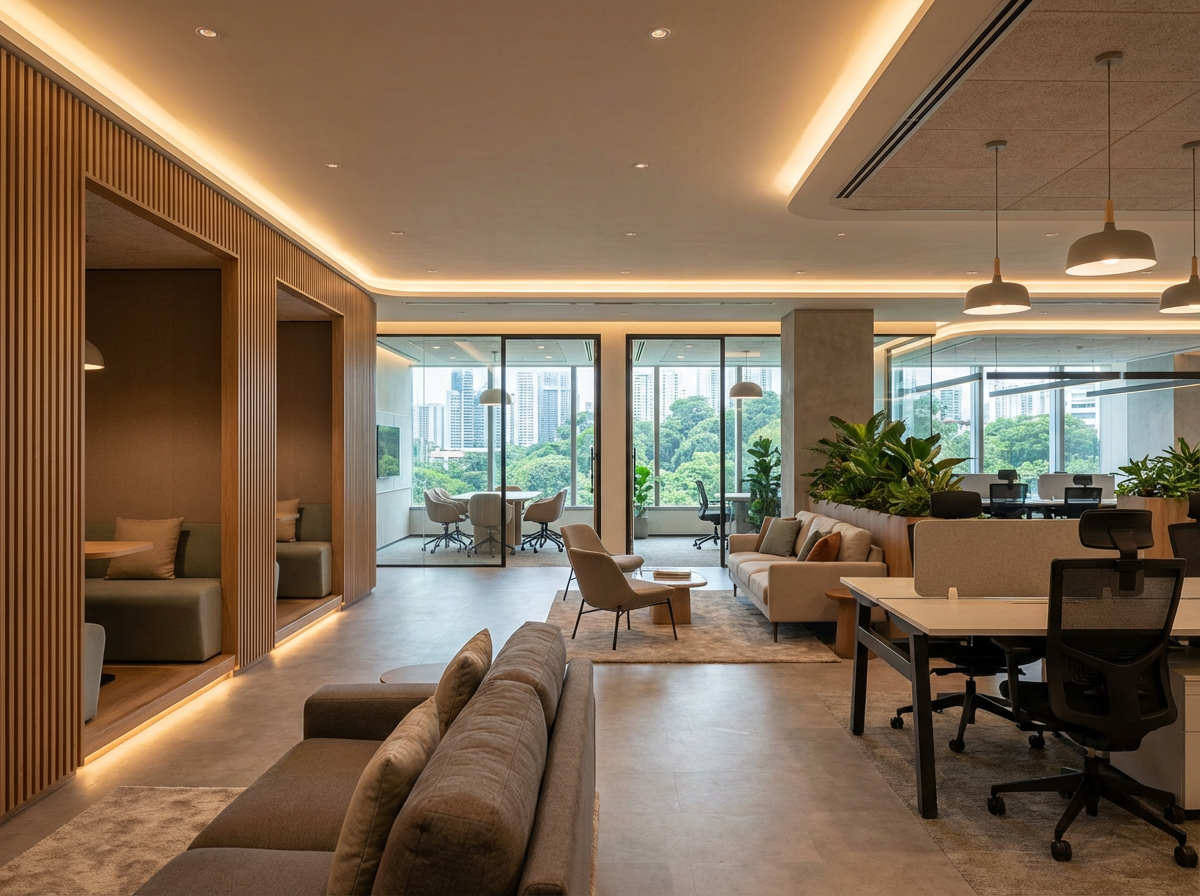
A zoned office divides the workplace into dedicated areas, each supporting different types of work. Instead of one giant workspace, you get:
Quiet focus rooms
Collaborative meeting zones
Private call booths
Creative brainstorming areas
Lounge and pantry spaces
Team-specific zones
This layout supports varied work modes and diverse personality types.
Benefits of Zoned Offices
Supports Focus and Deep Work
Quiet zones reduce distractions and allow teams to concentrate without interruptions.
Increased Privacy
Private rooms foster confidential discussions and sensitive work.
Structured, Purposeful Environment
Zoning helps employees understand how to use each space, improving productivity.
Better for Growing Teams
Zoned layouts provide clarity and stability as departments develop their own workflows.
Challenges of Zoned Offices
Higher Build Cost
More walls, fabrications, and furniture mean a larger investment.
Requires Strategic Planning
Poor zoning can create bottlenecks or disrupt movement flow.
Potential Fragmentation
If the design feels disconnected, it can reduce team interaction.
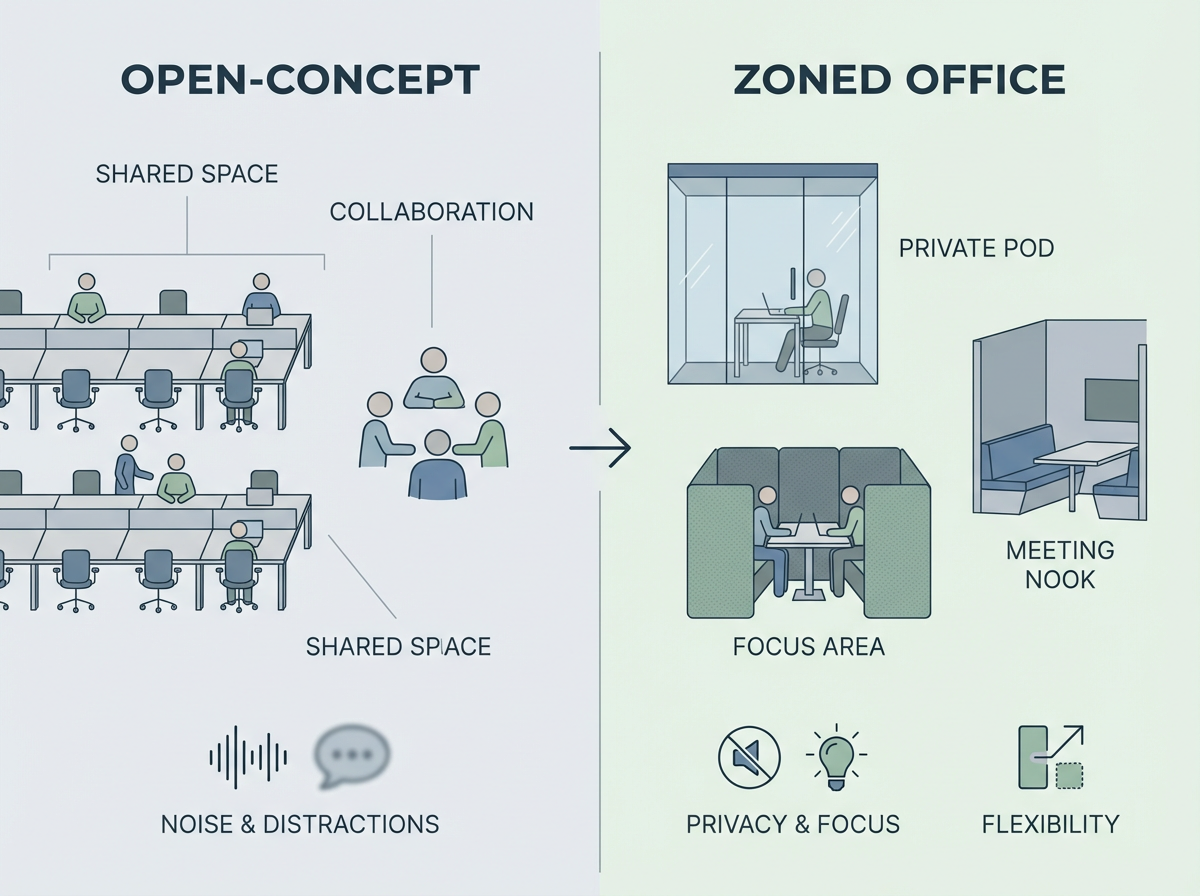
Open Concept vs. Zoned: Key Differences
To decide between the two, consider these factors:
Collaboration Style
Open Concept: Great for roles that thrive on frequent collaboration, like marketing, creative work, startups, and tech teams.
Zoned: Ideal for companies needing focused work, privacy, or structured collaboration.
Noise
Open Concept: Lively, but often noisy.
Zoned: Controlled and balanced.
Privacy
Open: Minimal.
Zoned: Excellent for confidential tasks and HR-sensitive roles.
Culture Expression
Open: Energetic, youthful, transparent.
Zoned: Mature, professional, intentional.
Flexibility
Open: Quick to rearrange and scale.
Zoned: Better long-term stability.
How to Choose the Right Layout
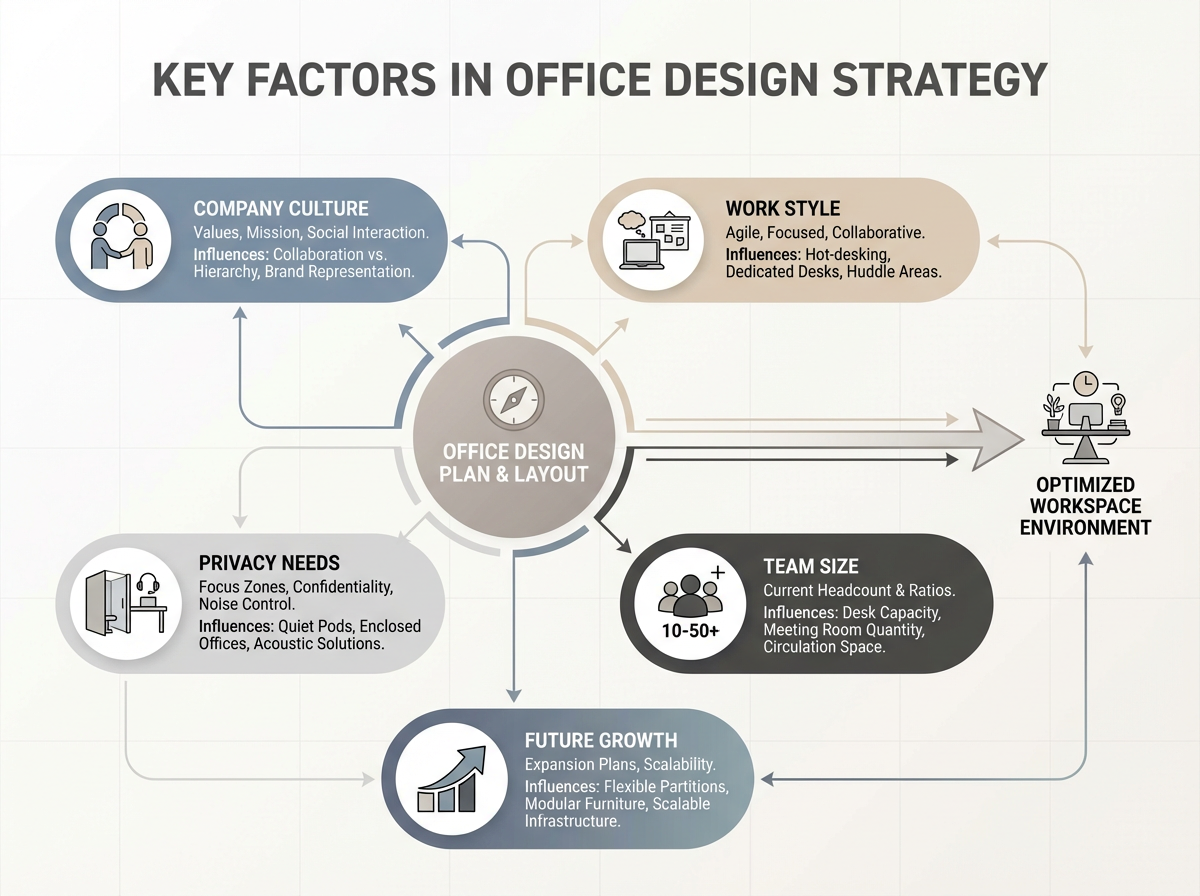
Here’s a simple framework used by our team:
Nature of Work
Choose open concept if your team:
Collaborates frequently
Works in fast-paced environments
Benefits from spontaneous communication
Choose zoned spaces if your team:
Needs quiet focus
Handles confidential information
Works in structured departments
Employee Personalities
A mix of introverts and extroverts benefits more from zoned layouts.
Highly extroverted teams may thrive in open spaces.
Office Size & Floor Plan
Small, narrow spaces → Open concept works better
Larger floor plates → Zoned layouts become more effective
Future Growth
Fast-growing teams → Open concept offers flexibility
Stable, department-based teams → Zoned provides structure
Company Culture
Let your brand guide the design.
A young startup may want openness; a professional firm may need privacy.
The Hybrid Office: Best of Both Worlds
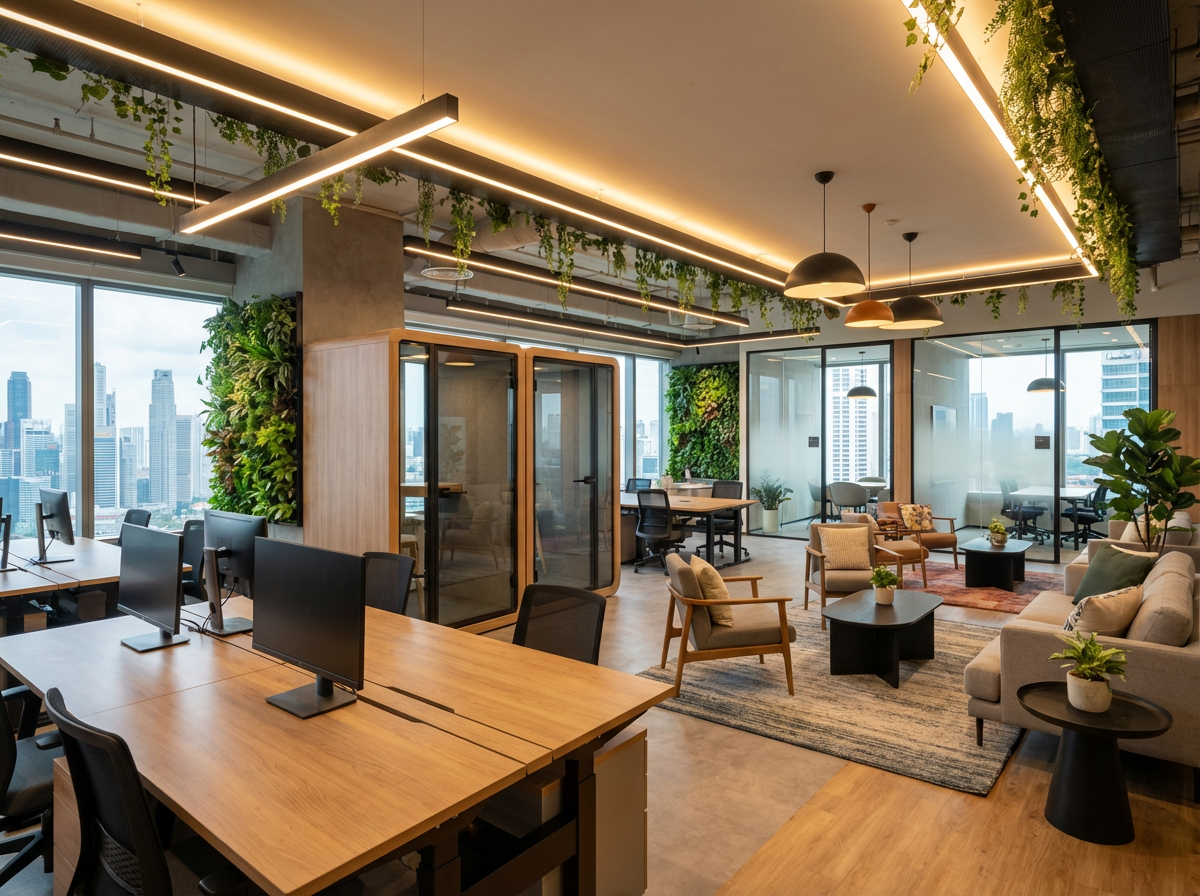
Many modern workplaces use a hybrid layout that blends open concept with zoning—a flexible approach known as activity-based working (ABW).
This model includes:
Open desking for day-to-day work
Quiet pods for deep focus
Collaboration lounges
Phone booths
Social zones
Meeting rooms
A hybrid environment adapts to different working styles and gives employees autonomy in choosing where they work.
Benefits of Hybrid Offices
Versatile and future-ready
Supports all personality types
Reduces noise while keeping collaboration
Encourages movement, improving wellness
Increases employee satisfaction
Final Thoughts: Choose the Layout That Serves Your People
There is no one size fits all answer. The best office layout depends on the unique needs of your team, your culture, and how your business operates day to day.
Here’s the simplest takeaway:
➡ Choose Open Concept if your workplace thrives on energy, creativity, and collaboration.
➡ Choose Zoned Layouts if your team needs focus, privacy, and structure.
➡ Choose Hybrid Design if you want flexibility and balance for a diverse workforce.
A well-designed office doesn’t just look good, it empowers people to do their best work. When employees feel comfortable, supported, and inspired by their environment, productivity and morale naturally follow.