Technology is no longer an add-on in interior design — it is becoming a fundamental part of how commercial spaces are planned, experienced, and operated. From smart offices and digitally enabled retail stores to tech-integrated restaurants, the role of technology in interior design has expanded far beyond screens and cables.
In Singapore’s fast-moving business environment, integrating technology thoughtfully into interior design helps companies create spaces that are more efficient, adaptable, and aligned with modern user expectations.
Technology as Part of the Design Strategy
Effective technology integration begins at the design stage, not after construction. When technology is considered early, it becomes seamlessly embedded into the space rather than visually intrusive or operationally limiting.
Experienced commercial interior design firms such as Ventra Pte Ltd approach technology as part of a holistic design strategy — ensuring that spatial planning, aesthetics, and systems work together cohesively.
This approach allows technology to enhance the user experience without compromising design intent.
Smart Offices: Enhancing Productivity and Flexibility
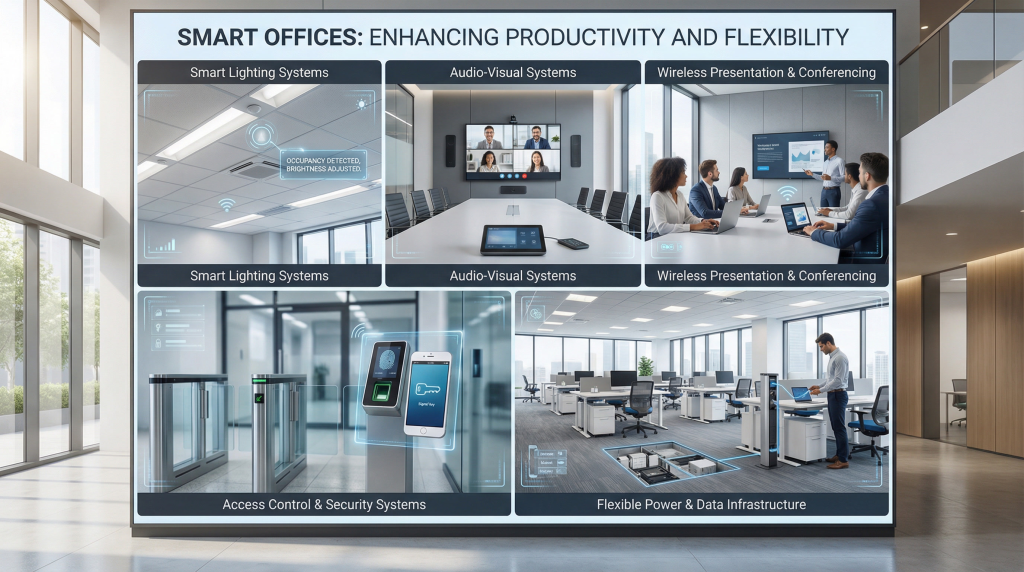
Common technology integrations include:
- Smart lighting systems with occupancy and daylight sensors
- Audio-visual systems for meeting rooms and collaboration spaces
- Wireless presentation and conferencing setups
- Access control and security systems
- Flexible power and data infrastructure
When these systems are integrated into the interior design, offices become more adaptable to change — supporting growth, reconfiguration, and evolving work patterns.
At Ventra, technology planning is coordinated alongside space planning to ensure clean detailing, intuitive user experience, and long-term flexibility.
Technology in Retail Interior Design
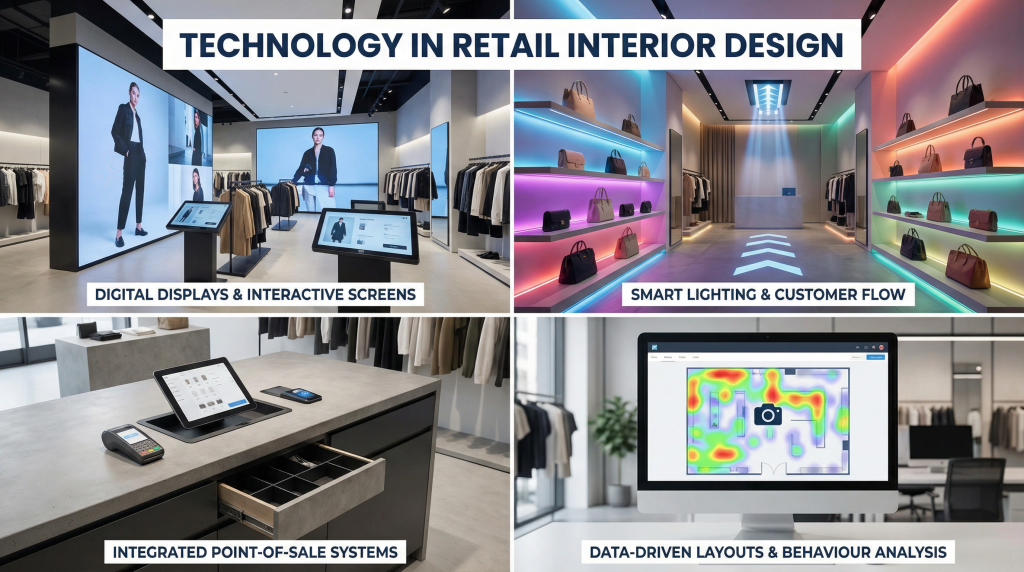
In retail environments, technology plays a key role in shaping customer experience and brand interaction.
Examples include:
- Digital displays and interactive screens
- Smart lighting to highlight products and guide customer flow
- Integrated point-of-sale systems
- Data-driven layouts informed by customer behaviour
When technology is embedded thoughtfully into the design, it enhances engagement without overwhelming the physical environment. Clean integration ensures that digital elements complement the brand rather than distract from it.
Technology-Driven Design in Restaurants & Cafés
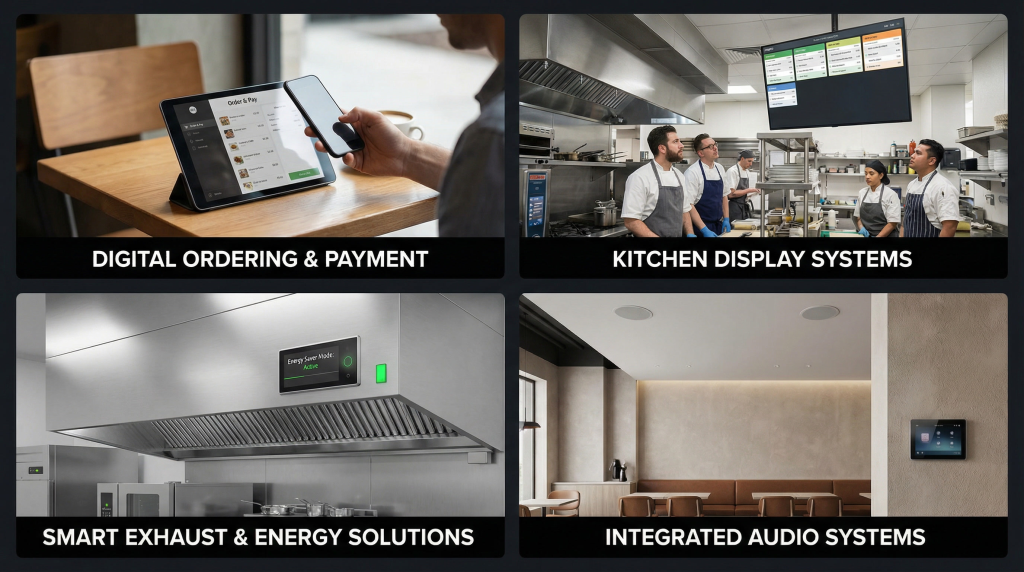
For F&B spaces, technology improves both front-of-house experience and back-of-house efficiency.
Key integrations often include:
- Digital ordering and payment systems
- Kitchen display systems
- Smart exhaust and energy management solutions
- Audio systems integrated into the spatial design
Interior design that anticipates these systems allows restaurants and cafés to operate more smoothly while maintaining a cohesive ambience and customer experience.
Smart Lighting and Environmental Controls
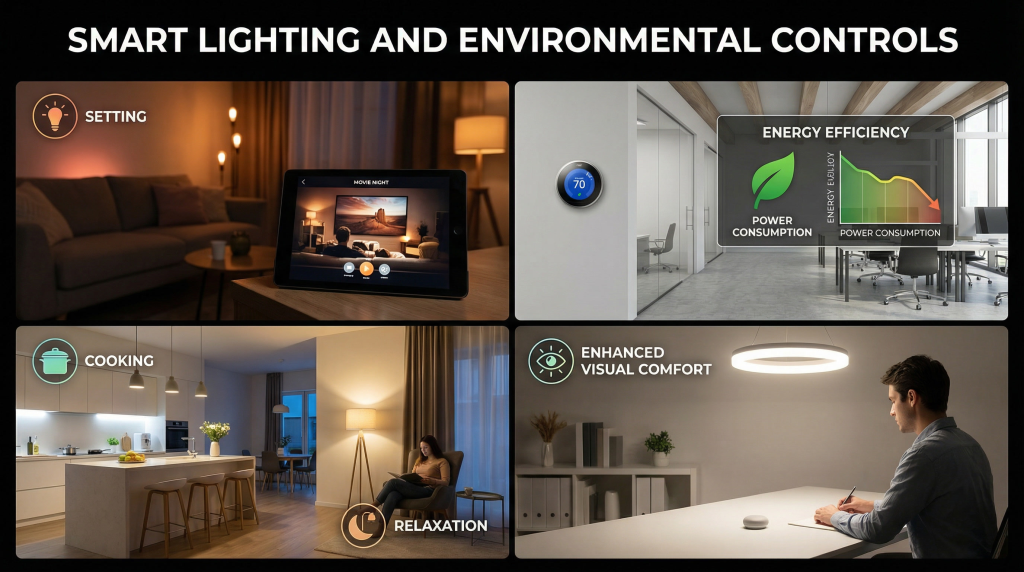
Lighting is one of the most impactful areas where technology and interior design intersect.
Smart lighting systems enable:
- Mood and scene control
- Energy efficiency
- Zoning for different functions
- Enhanced visual comfort
Similarly, environmental controls such as air-conditioning, ventilation, and acoustics can be designed to respond dynamically to occupancy and usage patterns.
Integrating these systems during the design phase ensures they remain visually discreet while delivering tangible operational benefits.
Technology and Brand Experience
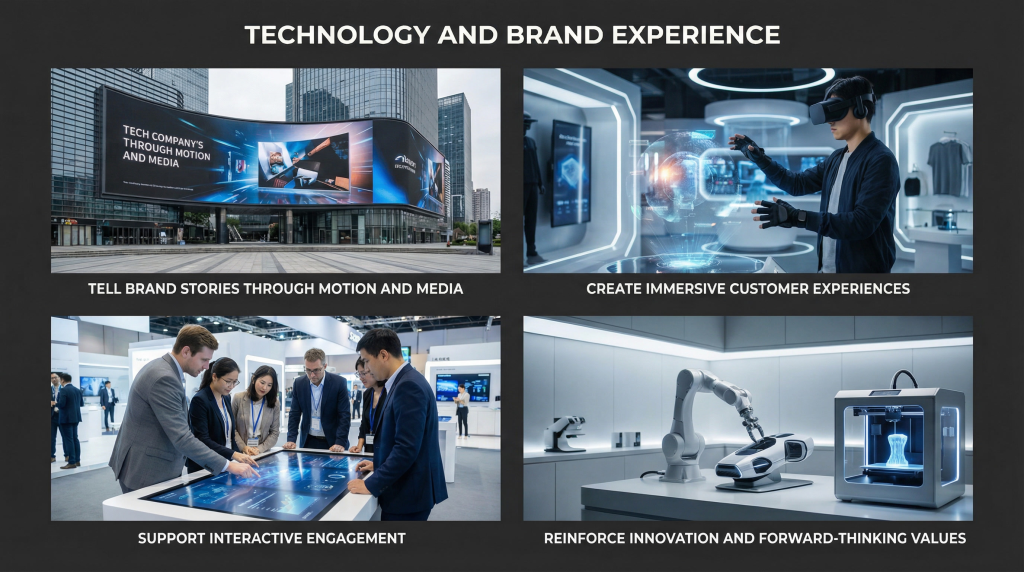
Technology also plays a role in reinforcing brand identity within commercial spaces.
Digital elements can:
- Tell brand stories through motion and media
- Create immersive customer experiences
- Support interactive engagement
- Reinforce innovation and forward-thinking values
When aligned with brand strategy, technology becomes an extension of the brand — not just a functional tool.
Ventra Pte Ltd works with clients to ensure that technology integration supports both operational needs and brand expression, creating spaces that feel contemporary yet timeless.
The Importance of Coordination and Expertise
Poorly planned technology integration can result in:
- Visual clutter
- Inefficient layouts
- Costly retrofits
- Operational disruptions
This is why coordination between designers, consultants, and contractors is essential. A design-build approach allows technology requirements to be resolved alongside design development and construction planning.
By managing this process holistically, experienced firms help clients avoid fragmented solutions and future limitations.
Designing for Future Adaptability
Technology evolves rapidly. Interior design that accommodates future upgrades is critical for long-term value.
Future-ready design considers:
- Accessible cable routing and containment
- Flexible power and data points
- Modular layouts
- Scalable systems
Rather than designing for today alone, smart commercial interiors are planned to adapt gracefully over time.
Final Thoughts
Integrating technology into interior design is no longer about adding devices — it is about creating intelligent, responsive environments that support how people work, shop, dine, and interact.
For commercial spaces in Singapore, thoughtful technology integration enhances efficiency, user experience, and brand perception — while positioning businesses for future growth.
With the right design expertise and early planning, technology becomes an invisible yet powerful layer within the built environment, delivering spaces that are not only beautiful, but truly smart.